For modern fashion and D2C brands, the visual content pipeline is undergoing a massive transformation. The days of organizing expensive, weeks-long studio photoshoots are being replaced by AI-driven visual creation. But there is a catch: generating a high-converting, professional AI prompt image requires much more than simply typing “a model wearing a dress” into a text box.
Whether you are creating editorial lifestyle shots for your Shopify homepage, localized ethnic wear campaigns for the Indian market, or standardized marketplace assets for Amazon India and Myntra, your output is only as good as your input. Mastering the art of prompt engineering is the key to producing photorealistic, brand-aligned visual assets.
In this comprehensive guide, we will break down the anatomy of a perfect e-commerce AI image prompt, provide real-world prompt frameworks for fashion and jewelry brands, and explain how an AI fashion production platform takes these prompts to the next level.
What is an AI Prompt Image?
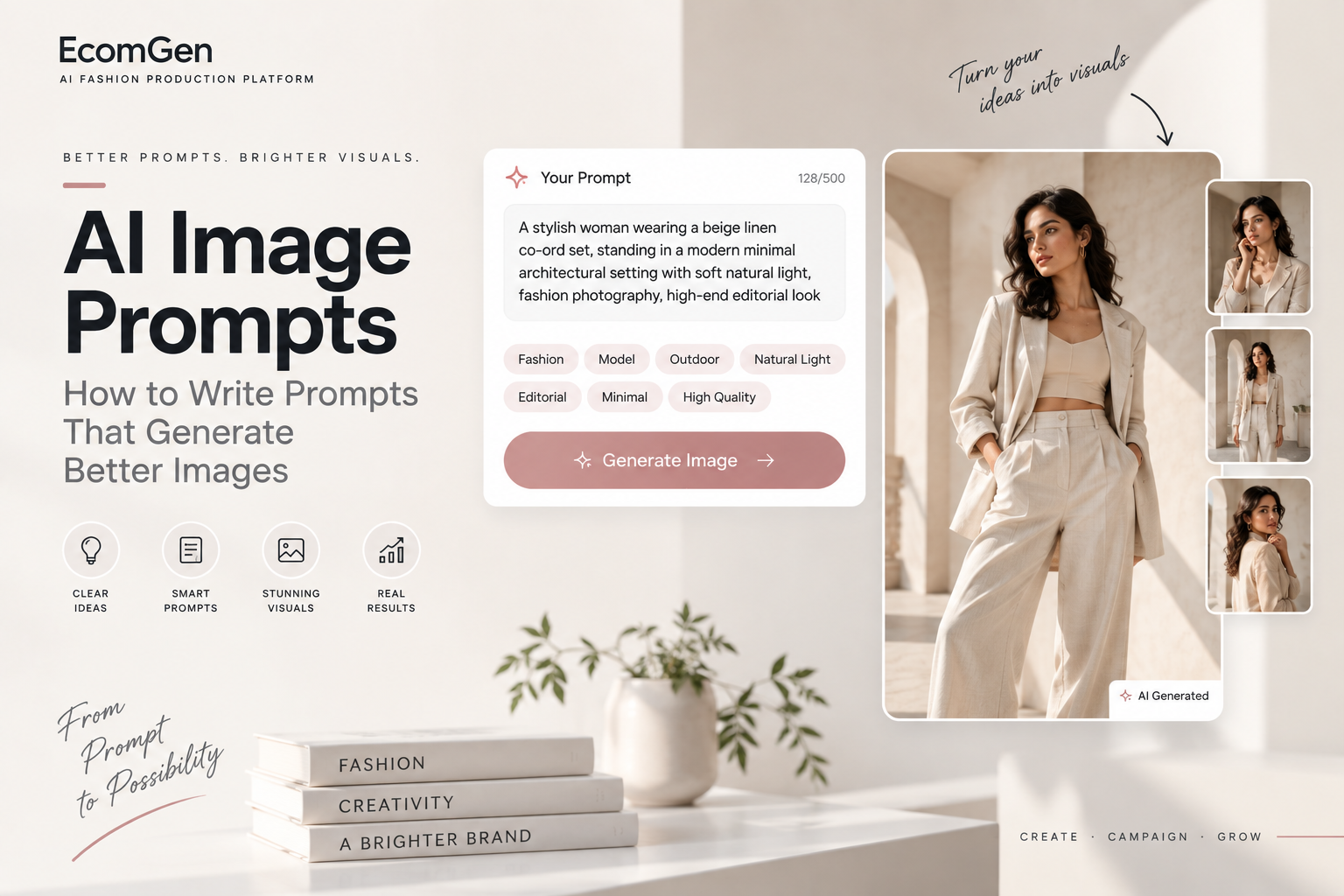
An AI prompt image refers to the visual output generated by an AI model (such as Stable Diffusion, FLUX, or Midjourney) based on a specific text instruction, known as a “prompt.” For e-commerce and fashion brands, an AI prompt acts as a virtual art director. It dictates the model’s appearance, the background setting, the lighting style, the camera lens, and the overall mood of the image.
While generic prompts might yield artistic or abstract results, an e-commerce-focused AI prompt must be highly structured to ensure photorealism, accurate lighting, and commercial viability.
The Anatomy of a Perfect E-commerce AI Prompt
To generate consistent, high-quality AI fashion photography, you must treat your prompt like a brief given to a professional photographer. A structured prompt formula dramatically reduces AI hallucinations and ensures your output matches your brand’s aesthetic.
The Core Formula:
[Subject/Model Details] + [Garment/Product Context] + [Setting/Location] + [Lighting] + [Camera/Lens Details] + [Style/Aesthetic]
| Element | Description | Examples |
|---|---|---|
| Subject | Who is wearing the product? Define age, ethnicity, pose, and expression. | “25-year-old South Asian female model, walking gracefully, confident expression…” |
| Setting | Where is the shoot taking place? Be specific about the environment. | “…on a sunlit street in Paris, blurred background…” OR “…in a modern minimalist studio with white walls…” |
| Lighting | How is the scene illuminated? Crucial for photorealism. | “…golden hour lighting, soft diffused studio light, harsh editorial flash…” |
| Camera/Lens | What equipment is the “AI” using? Dictates depth of field and perspective. | “…shot on 85mm lens, f/1.8, DSLR, ultra-detailed, 8k resolution…” |
| Aesthetic | The overall vibe or film stock reference. | “…Vogue editorial style, Kodak Portra 400 film, high-end fashion campaign.” |
Mastering AI Image Prompts: Real Examples for D2C Brands
Let’s look at how this structured framework applies to different segments of the e-commerce industry, from global western wear to localized Indian ethnic collections.
1. Global Western Wear (Shopify & Instagram Ads)
For D2C brands selling streetwear or contemporary fashion, the goal is often to create aspirational lifestyle content that stops users from scrolling.
- The Goal: An engaging lifestyle shot for an oversized denim jacket.
- The AI Prompt: “Full body shot of a 20-year-old diverse female model walking confidently across a downtown New York crosswalk. She is wearing a modern outfit. Shallow depth of field, background blurred. Soft sunset golden hour lighting, rim light on hair. Shot on Sony A7R IV, 50mm lens, f/2.8, photorealistic, high-end streetwear editorial, Vogue style, 8k.”
2. Indian Ethnic Wear (Myntra, Meesho, & Boutique Brands)
Indian ethnic wear—such as Banarasi Sarees, heavy Lehengas, and Anarkali suits—requires prompts that respect cultural aesthetics and highlight intricate detailing without making the image look cartoonish.
- The Goal: A majestic, high-converting catalog image for a festive Saree collection.
- The AI Prompt: “Medium portrait of a stunning 25-year-old Indian female model standing in a grand Rajasthani palace courtyard with sandstone architecture. She has elegant traditional makeup, a small bindi, and jasmine flowers in her hair. Warm volumetric lighting, soft sun rays, ultra-detailed fabric textures, rich vibrant colors. Shot on medium format camera, 85mm lens, f/1.4, cinematic, premium ethnic fashion campaign.”
3. High-End Fine Jewelry
Jewelry is notoriously difficult for AI. It requires macro photography parameters to ensure the metal reflects light correctly and the gemstones sparkle naturally.
- The Goal: A close-up shot of a Kundan necklace or a diamond pendant on a model.
- The AI Prompt: “Extreme close up macro shot of a female model’s neck and collarbone, wearing an intricate gold Kundan necklace. Soft, flawless skin texture. Studio lighting, softbox illumination, sharp focus on the jewelry, dramatic dark background to make the gold pop. Shot on 100mm macro lens, f/2.8, highly detailed reflections, premium luxury jewelry advertisement.”
The Secret Weapon: Negative Prompts
Knowing what to tell the AI not to generate is just as important as your primary prompt. A negative prompt tells the AI which elements to exclude from the image. This is vital for removing AI artifacts, fixing anatomical errors, and ensuring a clean commercial output.
Essential E-commerce Negative Prompt:
“ugly, deformed, disfigured, extra limbs, bad anatomy, weird hands, fused fingers, blurry, out of focus, overexposed, underexposed, text, watermarks, logo, cartoon, illustration, low resolution, unnatural skin.”
Why Text Prompts Aren’t Enough for E-commerce (The Product Accuracy Problem)
Here is the reality check: no matter how perfect your text prompt is, a standard AI image generator (like a basic Midjourney bot) cannot lock your specific physical product. If you describe a “red floral dress,” the AI will invent a beautiful, random red floral dress—but it won’t be your dress.
To use an AI prompt image for commercial e-commerce, you need advanced AI pipelines that utilize ControlNet and structural locking. This technology isolates your original garment from a simple flat-lay photo and forces the AI to build the prompted model and environment around your exact product, preserving every fold, zipper, and pattern.
Scale Your Content with EcomGen
Writing prompts in standard AI interfaces is incredibly time-consuming and often yields inconsistent lighting and brand aesthetics. EcomGen is the ultimate AI Fashion Production Platform built specifically to solve these challenges.
Instead of wrestling with complex prompt engineering from scratch, EcomGen provides intuitive tools designed for D2C brands. We combine the power of advanced image generation with strict product preservation, allowing you to:
- Transform basic ghost mannequin photos into high-fashion lifestyle imagery via AI product photography.
- Generate compliant marketplace assets with perfect white backgrounds or stylized settings.
- Turn your static AI images into engaging short-form videos for social media ads.
Stop Guessing With Generic Prompts
Leverage EcomGen’s specialized AI studio to guarantee product accuracy, consistent branding, and stunning lifestyle visuals.
Frequently Asked Questions (FAQs)
Does the length of an AI prompt image matter?
Yes and no. A longer prompt is not automatically better. What matters is density and structure. Be concise but highly descriptive. Group your terms logically (Subject, Setting, Lighting) rather than writing long, rambling paragraphs.
Can I use reference photos instead of just text?
Absolutely. The most advanced AI workflows use “Image-to-Image” (I2I) generation or IP-Adapters. This allows you to upload a reference photo for a specific pose, lighting style, or model face, and combine it with a text prompt to guide the final output. This is a core feature of enterprise platforms like EcomGen.
How do I generate a pure white background for Amazon India or Flipkart?
Marketplaces require clean, distraction-free imagery. In your prompt, specify: “isolated on a pure white background, studio catalog lighting, no shadows, minimalist.” Ensure your negative prompt includes: “cluttered background, outdoor, dark, shadows.”
Conclusion
Mastering the AI prompt image is a critical skill for any modern D2C brand, creative agency, or fashion marketer. By treating your prompts like professional photography briefs—detailing the lighting, the lens, the setting, and the model—you can generate striking lifestyle assets that rival high-end studio shoots.
However, true commercial scalability requires moving beyond basic text prompting. By integrating an AI fashion production platform that guarantees product accuracy and brand consistency, you can slash your production costs and launch global campaigns in a matter of minutes. Ready to elevate your visual content pipeline? Read more insights on our blog or create your first AI campaign with EcomGen today.